How to Set Up a Single Family Office in Singapore: The 2026 Playbook
Singapore has firmly established itself as the “Switzerland of Asia” attracting ultra-high-net-worth (UHNW) families with its political stability, robust legal framework, and tax-efficient structures. However, the landscape is dynamic. With significant regulatory updates in late 2024 and early 2025, setting up a Single Family Office (SFO) is no longer just a paperwork exercise—it is a strategic operation requiring “economic substance.”
This guide consolidates the latest requirements, incentives, and operational steps for establishing an SFO in Singapore.
-
The Strategic Structure: Two Entities, One Goal
Unlike a personal investment holding company, a professional SFO structure in Singapore typically involves two distinct legal entities. This separation is crucial for regulatory exemptions and tax optimization.
- The Fund Entity (The “Pot of Gold”): This company holds the family’s assets (bankable assets, real estate, private equity). It is the entity that applies for tax incentives.
- The Fund Management Company (The “Manager”): This company employs the staff (investment professionals), pays the bills, and manages the Fund Entity. This is the “Family Office” proper.
-
The “Golden Tickets”: Tax Incentive Schemes (13O & 13U)
Singapore offers tax exemptions on specified income (e.g., dividends, interest, gains) derived from designated investments. Without these, your global investment income could be subject to Singapore’s corporate tax rate of 17%.
The two primary schemes are Section 13O (formerly 13R) and Section 13U (formerly 13X). As of January 1, 2025, the requirements have been tightened to ensure economic contribution to Singapore.
| Feature | Section 13O (Onshore Fund) | Section 13U (Enhanced Tier Fund) |
| Minimum AUM | S$20 Million (in Designated Investments) | S$50 Million (in Designated Investments) |
| Legal Structure | Must be a Singapore Company (Pte Ltd or VCC). | Can be any structure (Company, Trust, LP) and can be offshore (e.g., Cayman) or onshore. |
| Investment Professionals (IPs) | Minimum 2 IPs. | Minimum 3 IPs (at least 1 must be a non-family member). |
| Min. Business Spending | Tiered: S$200k – S$500k annually (depending on AUM). | Tiered: S$500k – S$1M annually (depending on AUM). |
| Approval Process | Must be approved by MAS. | Must be approved by MAS. |
2025 Update – AUM Calculation: AUM is now calculated based on “Designated Investments” (DI) rather than Net Asset Value (NAV). This means non-financial assets (like art or crypto not held in ETNs) may not count toward the S$20M/S$50M threshold.
-
Regulatory Licensing: The “Class Exemption”
In Singapore, managing third-party money requires a Capital Markets Services (CMS) license. However, SFOs are essentially managing their own money.
To avoid the arduous process of obtaining a full license, SFOs utilize a Licensing Exemption.
- The Rule: You must confirm that the SFO manages funds only for related family members.
- The Change: Previously, this was a case-by-case application. Now, it operates under a stricter Class Exemption notification framework. You must verify you are wholly owned by members of the same family and provide legal opinion or declarations to MAS confirming this status.
-
Step-by-Step Setup Guide
Setting up an SFO is a linear process, but delays often occur at the banking stage. Expect the entire timeline to take 4 to 6 months (though MAS has recently aimed to cut tax incentive wait times to ~3 months for straightforward cases).
Phase 1: Incorporation & Structuring (Weeks 1-4)
- Define Objectives: Determine if you want simple wealth preservation or a legacy vehicle for philanthropy and succession.
- Incorporation: Register both the Fund Company and the Family Office Company with ACRA (Accounting and Corporate Regulatory Authority).
- Screening: As of late 2024, new applicants must submit a screening report from a specialized service provider (e.g., Avvanz, BDO, EY) to verify the family’s background and source of wealth.
Phase 2: Banking & Substance (Weeks 5-12)
- Open Bank Accounts: This is the highest hurdle. Private banks will conduct deep Know-Your-Customer (KYC) checks. You cannot proceed without a functional bank account.
- Hiring: Employ your Investment Professionals (IPs). For 13O, you need two. For 13U, you need three (one non-family). These IPs must be tax residents in Singapore and earn a minimum salary (typically >S$3,500/month, though significantly higher for senior roles).
Phase 3: Applications (Weeks 12-24)
- Licensing Exemption: Notify MAS of your commencement of business and claim your exemption from holding a CMS license.
- Tax Incentive Application: Submit the Section 13O or 13U application to MAS via the MASNET portal.
- Operationalize: Once approved, you must meet your annual spending and investment requirements strictly.
-
Key Operational Requirements: “Spending” & “investing”
Singapore wants SFOs to stimulate the local economy. You cannot just park money here; you must deploy it.
A. Tiered Spending Requirement
Instead of a flat S$200k spend, the requirement is now tiered based on your AUM size.
- AUM < S$250M: Min. Local Business Spending (LBS) of S$200,000.
- AUM ≥ S$250M: Min. LBS of S$500,000.
- Note: “Local Business Spending” includes salaries paid to staff in Singapore, office rental, advisory fees to local firms, and tax services.
B. Capital Deployment Requirement (CDR)
SFOs must invest the lower of 10% of AUM or S$10 million into specific “local” categories:
- Equities listed on the Singapore Exchange (SGX).
- Qualifying debt securities.
- Funds distributed by Singapore-licensed managers.
- Climate-related investments (Green bonds/projects).
- Blended finance structures (Grants/investments into concessional capital projects).
-
Immigration: The Global Investor Programme (GIP)
For families seeking Permanent Residency (PR), the GIP is the direct route.
- The Family Office Option: requires you to establish an SFO with at least S$200 million in AUM.
- The 2025 Kicker: If applying for PR under this scheme, you must invest at least S$50 million specifically into Singapore-listed equities (excluding REITs and Business Trusts). This is a significantly higher bar than in previous years, designed to boost the local stock market.
Summary Checklist
- [ ] Capital: Do you have at least S$20M in bankable financial assets?
- [ ] Talent: Can you hire 2-3 investment professionals in Singapore?
- [ ] Structure: Have you incorporated two separate entities (Fund vs. Manager)?
- [ ] Banking: is your source of wealth documentation ready for bank compliance?
- [ ] Commitment: Are you ready to spend S$200k+ annually in Singapore?
Disclaimer: This article is for informational purposes only and does not constitute legal or financial advice. Regulations in Singapore change frequently; always consult with a qualified legal or tax advisor.
Important: The information and opinions in this article are for general information purposes only. They should not be relied on as professional financial advice. Readers should seek unbiased financial advice that is customised to their specific financial objectives, situations & needs. This advertisement or publication has not been reviewed by the Monetary Authority of Singapore.
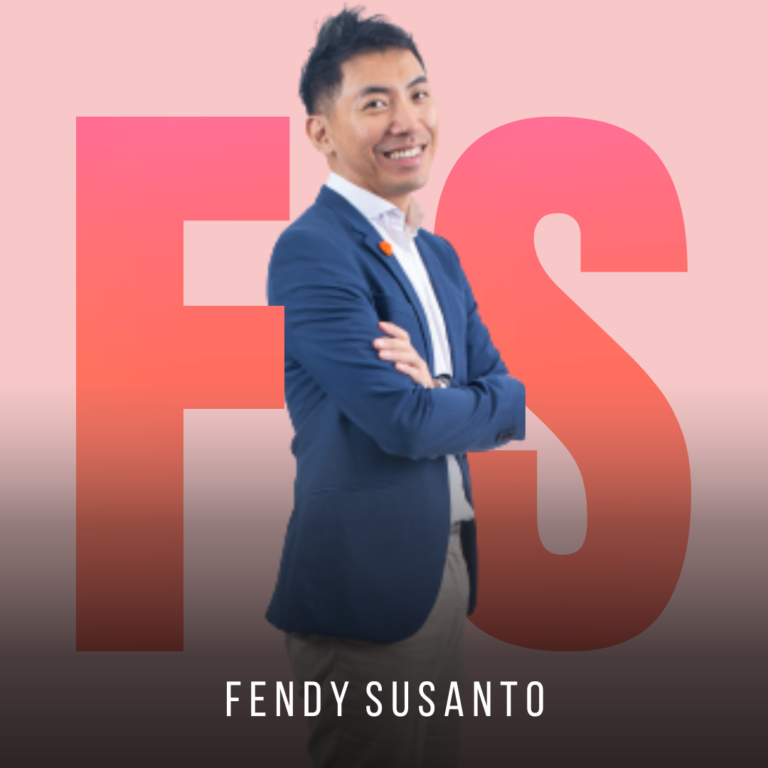
Published By:
Fendy Susanto
Fendy hails from a family who value entrepreneurship, where he understands that ones’ finance is ones’ responsibility. He follow suit after leaving his decade-long career in construction industry, becoming a Financial Advisor, an Entrepreneur and a Content Creator.
Prior to joining this career, Fendy had lost his Mom and Dad to Cancer and Heart Attack, respectively. Having a first hand experience on how devastating that was financially and emotionally, his main goal is to “Leave no Life Unprotected”
With his creative traits and his warm personality, rest assured that your needs always comes first at the best possible way. No doubts on the level of advices and services delivered as testified by his clienteles.
CONTACT US
- 150 Beach Road #12-01/08, Gateway West Singapore 189720
- +65 62221889
- +65 62221019
- feedback@fa.com.sg