
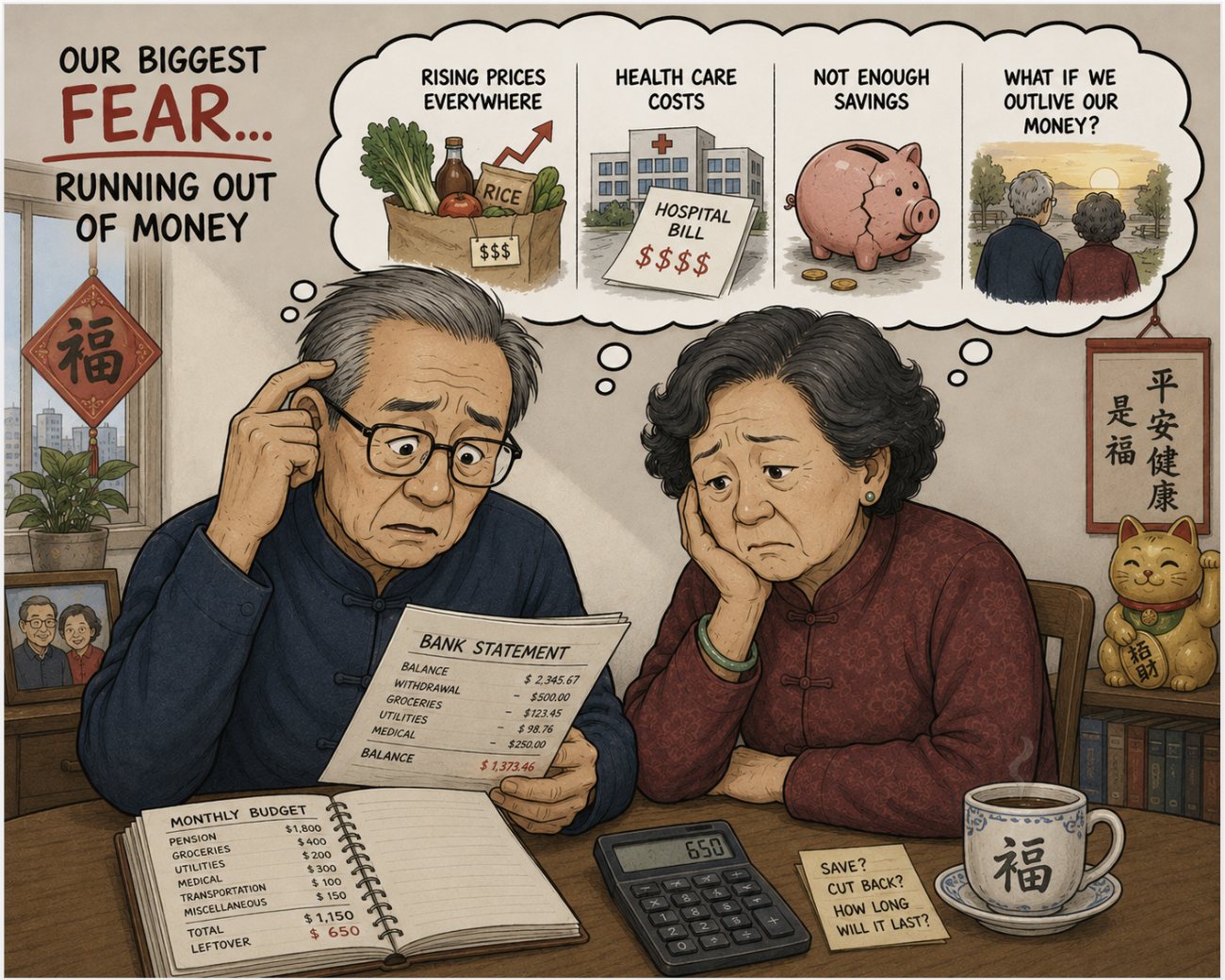
Most people think the biggest fear in retirement is running out of money.

Ironically, one of the more common problems may be the opposite:

Having enough money, but being too afraid to spend it.

After decades of saving, investing, and watching expenses, many retirees find it difficult to switch from a “saving mindset” to a “spending mindset.”

They continue to delay travel.
Put off hobbies.
Avoid experiences they’ve always wanted.

Not because they can’t afford them, but because they’re worried about “what if.”

What if I live longer than expected?
What if markets fall?
What if healthcare costs rise?

These are valid concerns.

But retirement planning isn’t just about making sure your money lasts.

It’s also about making sure your money serves its purpose.

I’ve met retirees who are financially secure but still hesitate to spend on things that would genuinely improve their quality of life.

A good retirement plan should provide more than financial security.

It should provide confidence.

Confidence to enjoy retirement without constantly wondering whether every dollar spent is a mistake.

The goal isn’t to die with the largest account balance possible.

The goal is to use your resources wisely to create the retirement you’ve worked so hard to achieve.

Often, the hardest part of retirement isn’t building the nest egg—it’s giving yourself permission to spend it.

Have you seen this among retirees—or perhaps even in your own family?


Important: The information and opinions in this article are for general information purposes only. They should not be relied on as professional financial advice. Readers should seek unbiased financial advice that is customised to their specific financial objectives, situations & needs. This advertisement or publication has not been reviewed by the Monetary Authority of Singapore.

Published By:

Tan Siak Lim

More than 20 years in the financial advisory business, focus on mainly help people achieve a comfortable retirement through portfolio management, with diversification to reduce the votaility and still achieving the required rate of return.

Also helps wealthy family (>$3m estate, including property, investment and insurance proceeds) pass on their wealth to future generations, minimizing the 3C, confusion, cost, and conflict. Estate planning is probably best done by a qualified experienced financial adviser rather than a lawyer. The lawyer is able to draft a will, but because he is not a financial adviser, he is usually unable to put comprehensive financial consideration into the design of the will. Will drafting is a mechanical process that software can easily generate, there is little value. It is the architecting of a wealth distribution strategy with creative financial products and ideas that is the real value.

CONTACT US