
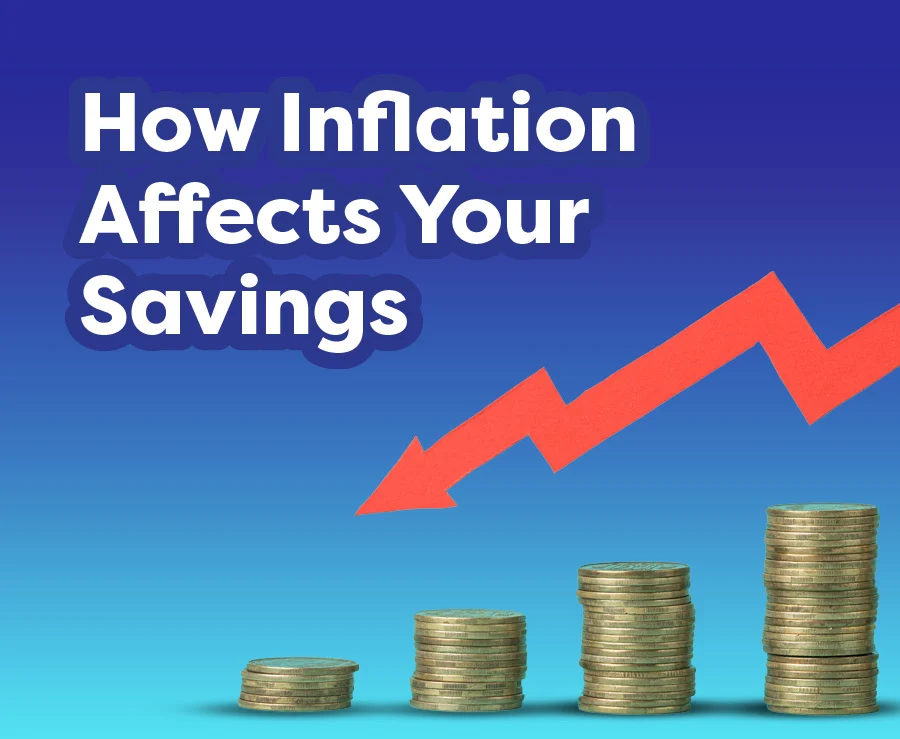
The Great Singaporean Savings Trap: How Inflation is Quietly Costing You a Fortune
For generations, we’ve been taught a powerful financial mantra: save your money. It’s a lesson in discipline, prudence, and security, etched into the Singaporean mindset. We diligently set aside a portion of our paycheque, watch our bank balance grow, and feel a sense of safety in that rising number.
But what if that feeling of safety is an illusion? What if, by focusing only on saving, we are unintentionally allowing a silent thief to dip into our hard-earned funds every single day?
That thief has a name: Inflation. And understanding how it works is the single most important step in moving from simply saving your money to truly growing your wealth.
The Story of Your Favourite Kopi
To understand inflation, you don’t need complex charts. You just need to think about the price of your morning kopi. Ten years ago, you might have paid S1.00 for it. Today, that same cup might cost S1.50.
The coffee hasn’t changed, but the value of your dollar has. Inflation is the rate at which the general level of prices for goods and services is rising, and subsequently, the purchasing power of your money is falling. While your S1coinisstillaS1 coin, what it can buy has diminished.
The Math of Losing Money Safely
Let’s put this into perspective with a common scenario. Meet Chloe, The Diligent Saver.
At age 30, Chloe has worked hard and built up a respectable S$50,000 in her savings account. She feels secure knowing this emergency fund is safe. Her bank gives her a standard interest rate of 0.5% per year.
Now, let’s look at what happens over the next 10 years, assuming a conservative average inflation rate of 2.5% (in line with Singapore’s long-term outlook).
- Chloe’s Savings Growth (The Good News):
- With a 0.5% interest rate, her S50,000will grow to approximately S52,557 after 10 years. On paper, she has made money.
- The Cost-of-Living Growth (The Bad News):
- The “basket” of goods and services she could buy with S50,000 today will cost much more in the future due to It will cost her more in 10 years to buy the exact same things.
- The Result: A S$11,447 Purchasing Power Gap
- This is the critical part. Although Chloe’s bank balance shows S52,557, she now needs over S64,000 to maintain her current standard of living. She is effectively S$11,447 poorer in terms of real-world purchasing power.
Her money was “safe,” but it was silently and steadily losing its value.
The Leaky Bucket Analogy
Think of your savings account as a bucket. The interest your bank pays is a tiny trickle of water flowing into the bucket. Inflation, however, is a larger, constant leak draining water out of the bottom.
If your only goal is to save, you are fighting a losing battle, diligently pouring water into a bucket that is designed to leak.
The Solution: Building an Engine, Not Just a Reservoir
This doesn’t mean you should stop saving. Savings are the essential foundation of your financial house—they are your emergency fund for life’s unexpected turns.
The solution is to distinguish between short-term savings and long-term wealth. For money you don’t need in the next five years, the goal must shift from merely storing it to growing it.
This is the role of investing.
Investing is the act of using your money to buy assets—like stocks, bonds, or properties—that have the potential to grow at a rate faster than inflation. It’s about turning your leaky bucket into a powerful engine.
From Saver to Investor
Becoming an investor doesn’t mean you need to be an expert overnight. It starts with a simple shift in mindset: acknowledging that true financial security isn’t just about how much you have saved, but about what your savings can do.
Your first step is to educate yourself. Learn about the different ways to invest, understand your own risk tolerance, and create a plan. By doing so, you can finally plug the leak in your financial bucket and ensure that your hard-earned money doesn’t just survive but thrives.
Important: The information and opinions in this article are for general information purposes only. They should not be relied on as professional financial advice. Readers should seek unbiased financial advice that is customised to their specific financial objectives, situations & needs. This advertisement or publication has not been reviewed by the Monetary Authority of Singapore.

Published By:
Forget generic financial plans. I believe in crafting strategies as unique as you are. Whether you’re just starting out, building a family, or planning for retirement, my approach begins with listening. Understanding your individual circumstances, your priorities, and your dreams is paramount. Together, we’ll develop a practical, step-by-step plan to navigate your financial journey, ensuring you feel informed, confident, and in control every step of the way.

CONTACT US
- 150 Beach Road #12-01/08, Gateway West Singapore 189720
- +65 62221889
- +65 62221019
- feedback@fa.com.sg