
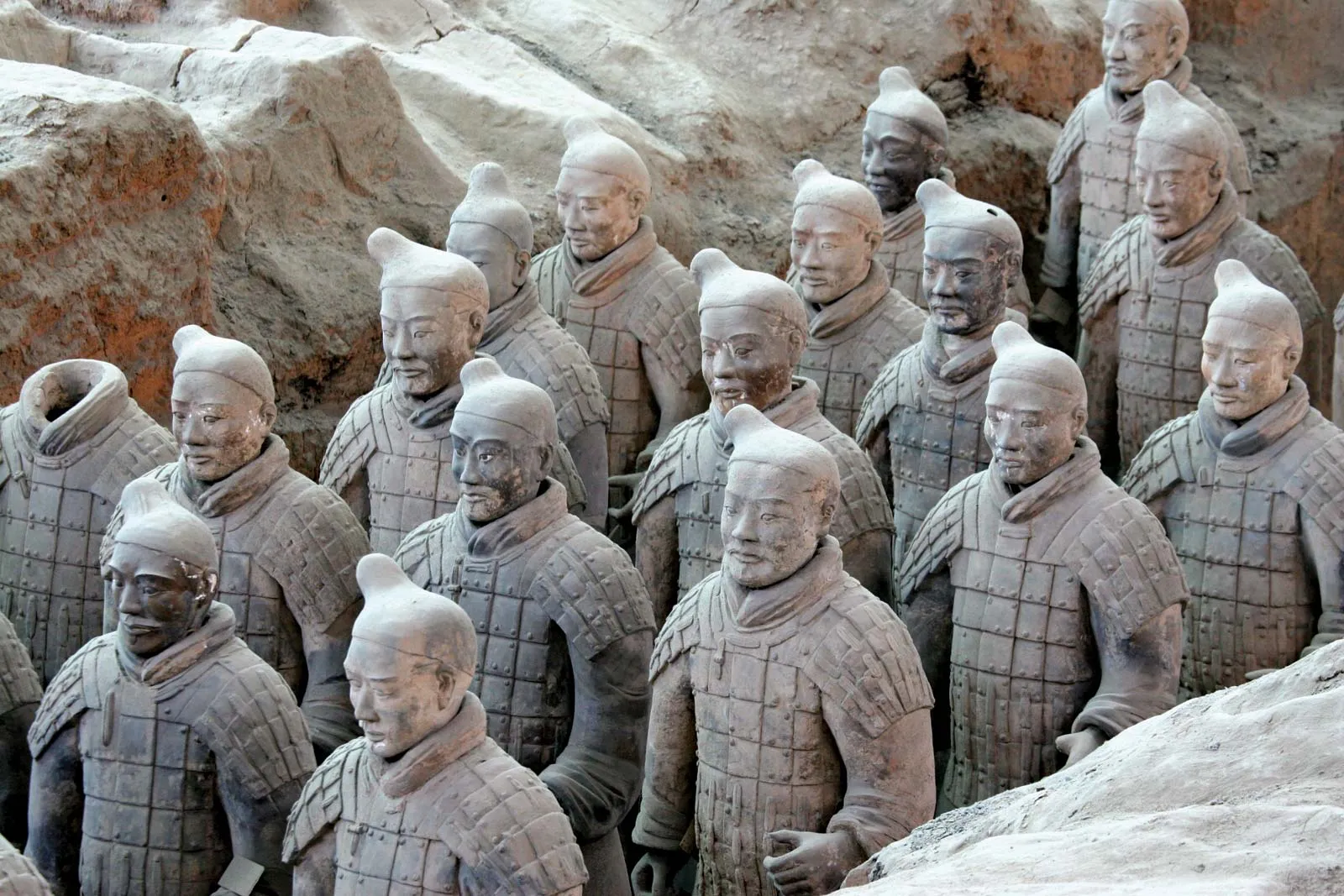
The Qin Dynasty started out as a city state called Qin. At one point, it was at a state of decline, threatened by neighbouring Chinese states, and thought to be inferior. Life was particularly harsh for the people there. But during the rule of Qin’s Duke Xiao, the state overcame its adversities and, against all odds, set a strong foundation that would lead not only to the rise of the Qin Dynasty, but the unification of China itself. However, the Dynasty fell as quickly as it rose, leaving a strong mark in history as well as valuable lessons that are still relevant today.
Here are some lessons we can learn from the Qin Dynasty:
Lesson 1: How to create wealth
Wealth allocation is crucial.
The ancient story:
When the Duke of Qin saw that agriculture and animal husbandry were underdeveloped whilst the nobles were squandering resources, he realised the need for wealth allocation – a strategy to spread out the state’s assets and investments. He then carried out reforms and redistributed the wealth to invest in agriculture and defence. By redeploying resources, the state managed to increase its food production, ultimately allowing the people to prosper, and protecting its newfound wealth.
Lesson:
If your objective is to build and secure wealth, allocate the majority of your effort and resources to that cause. Divert funds away from unnecessary expenses and towards wealth protection and accumulation. By doing this, you are maximising your wealth, and putting resources into long-term wealth generation.
The state’s success also shows that, with the right strategies and the right attitudes, one does not necessarily require a high disposable income to reach his or her financial goals. One can overcome any adversity and emerge stronger, whatever the odds.
Lesson 2: How to grow wealth
Far-sightedness and determination are essential for success.
The ancient story:
The leaders of the state set clear goals – despite not having the resources, they had the determination to achieve their aims. Their strategy: short-term pain and long-term gain. Duke Xiao and his ministers made short-term sacrifices without losing sight of their goal.
Lesson:
Had Qin’s leaders given up on their goals at any point, their success would not have been possible. Under the Duke’s leadership, the state implemented infrastructure projects and put legal systems in place – most of which were largely unpopular with the nobles at that time. However, he persevered, and his efforts saw the state achieve unprecedented growth.
Take the recent COVID-19 pandemic for example, where the markets crashed in March. Had one given up and liquidated his or her portfolio in a panic to keep the proceeds as cash, he or she would have been significantly set back further from his or her goals. In hindsight, these unnecessary losses would be mitigated by just persevering for a few months.
Lesson 3: How to secure wealth
A trusted adviser is vital.
The ancient story:
The Duke Xiao of Qin’s success was largely attributed to his adviser Wei Yang. For years, the Duke had sought out talents to bring about sweeping and revolutionary reforms to his state. Eventually, he found Wei Yang, and the duo developed great mutual trust over the years. It came to a point where the Duke would let Wei Yang lead his army in his stead if the latter had advised him to do so. Wei Yang would later go on to be known as the Father of modern Chinese Legalism.
Lesson:
Like the Duke, you need to develop a bond with a professional adviser, so that you can have access to varying points of view This will help you when you encounter situations where it may be hard to detach yourself and retain an impartial stance in decision making; you will also have a professional with the right expertise to assist you
Lesson 4: How to transfer wealth
Succession planning cannot be overlooked.
The ancient story:
Despite its legendary success, the Dynasty fell quickly. After China’s unification and a short-lived 15-year reign, it collapsed after the death of Emperor Qin Shi Huang. The lack of legacy planning gave rise to in-fighting, and ultimately, divided the nation and gave adversaries an opportunity to undo the work of generations. In this instance, if the Emperor had a line of succession planned properly, the power struggle could have been avoided. In fact, history has seen many unprecedented successes undone because of a lack of succession planning.
Lesson:
Having a succession plan gives you a clear vision to work with the person or people who will eventually take over your assets or business. This gives you clarity, time and opportunities to pass on your knowledge and instil in your successor(s), principles and a vision for your assets’ or business’s long-term future. It will also help in avoiding internal disputes that are often costly and lengthy.