

Getting retrenched in your 50s can feel like a punch to the gut. After decades of dedicated work, you were likely on the final, most crucial stretch of your journey towards a well-deserved retirement. A sudden job loss at this stage doesn’t just affect your income; it shakes your confidence and throws a wrench into your life’s most important financial plan.
The decisions you make in the first few weeks after a layoff are absolutely critical. Acting on impulse or out of panic can lead to irreversible mistakes that jeopardise the very nest egg you’ve spent a lifetime building.
This guide is your financial first-aid kit. It’s a 5-step triage plan designed to help you regain control, stabilise your situation, and create a thoughtful bridge to your next chapter. Following these steps can be the difference between a temporary setback and a permanent retirement crisis.
Step 1: Stay Calm and Gain Financial Control
The first and most important step is to resist the urge to make any sudden financial moves. Don’t rush to sell your investments if the market is down, and don’t immediately decide to downgrade your home. The goal right now is clarity, not drastic action.
Take a few days to process the news. Your immediate task is to get a crystal-clear picture of your financial situation. This means gathering all your key documents: bank statements, investment portfolio summaries, insurance policies, and your latest CPF statement. You cannot make a sound plan without knowing exactly what you have and where it is. This emotional and administrative pause prevents panic-driven decisions you’ll later regret.
Step 2: Understand Your Severance Package
Your severance package is your primary financial lifeline. It’s crucial to understand every component of it. Typically, this will be outlined in the letter from your employer and may include:
- Salary in lieu of notice: Pay for the notice period you are not required to serve.
- Gratuity/Retrenchment benefit: An ex-gratia payment that depends on your company’s policy and your years of service.
- Encashment of unused annual leave: Payment for any accrued leave you haven’t taken.
- Unpaid bonuses or commissions: Any outstanding variable pay you are contractually owed.
This sum isn’t a windfall—it’s the capital you’ll use to execute the rest of your plan.
Step 3: Create a ‘Bridge’ Budget and Calculate Your Runway
This is where the rubber meets the road. You need to determine how long your current funds will last. To do this, create a temporary, bare-bones budget.
- List All Income Sources: This includes your severance payout, any rental income, and your spouse’s income if applicable.
- Tally Your Fixed Expenses: Itemise your non-negotiables: mortgage or rent, insurance premiums, utility bills, car loans, and basic grocery costs.
- Review Your Variable Expenses: Scrutinise your “wants”—dining out, subscriptions, entertainment, and holidays. This is where you can make immediate and significant cuts to reduce your monthly cash burn
Once you have your total available cash (severance + savings) and your new, lean monthly expenses, you can calculate your financial “runway.” For example, if you have $100,000 in cash and your essential monthly expenses are $5,000, you have a 20-month runway. Knowing this number transforms an undefined fear into a manageable timeframe.
Step 4: Activate Your Financial Buffers
Explore other layers of financial safety to activate.
- Your Emergency Fund: This is precisely the situation your emergency fund was built for. A healthy fund of about 6 months of living expenses should be your first line of defence, used to cover your expenses while you preserve your severance package for as long as possible.
- Insurance Policies: Review your insurance coverage. Do any of your policies have a retrenchment benefit or premium waiver feature? It’s worth checking the fine print.
Step 5: Strategise Your Next Chapter
With your immediate financial situation stabilised, you can now think strategically about your next move. Broadly, you have three paths:
- Re-employment: Actively seek a new full-time role. This may require upskilling or being open to a different industry or a contract position.
- Entrepreneurship/Consulting: Use your decades of experience to start a small business or offer consulting services in your field.
- Early Retirement: If your finances are robust enough, you might decide that this is the moment to retire. This requires a very careful and thorough analysis of your assets and a sustainable withdrawal plan.
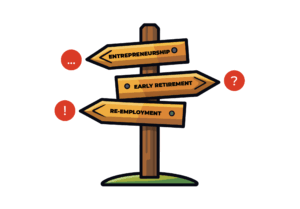
Each path has vastly different financial implications. The key is to make a conscious choice rather than drifting into one by default.
Let’s Chart Your Path Forward
A retrenchment in your 50s is a significant life event, but it doesn’t have to be the end of your financial security. By taking these deliberate, measured steps, you can navigate this transition with clarity and control.
Navigating this alone can be overwhelming. To help you take that crucial next step, I host a complimentary bi-weekly online workshop designed for individuals like you.
In this hands-on workshop, we help you stress-test your finances for an early retirement and strategise your next chapter in a comfortable, online setting.
[Click here to register for this workshop]
Let’s connect for a confidential, no-obligation consultation, and let’s chart a clear and confident path forward for your future.