
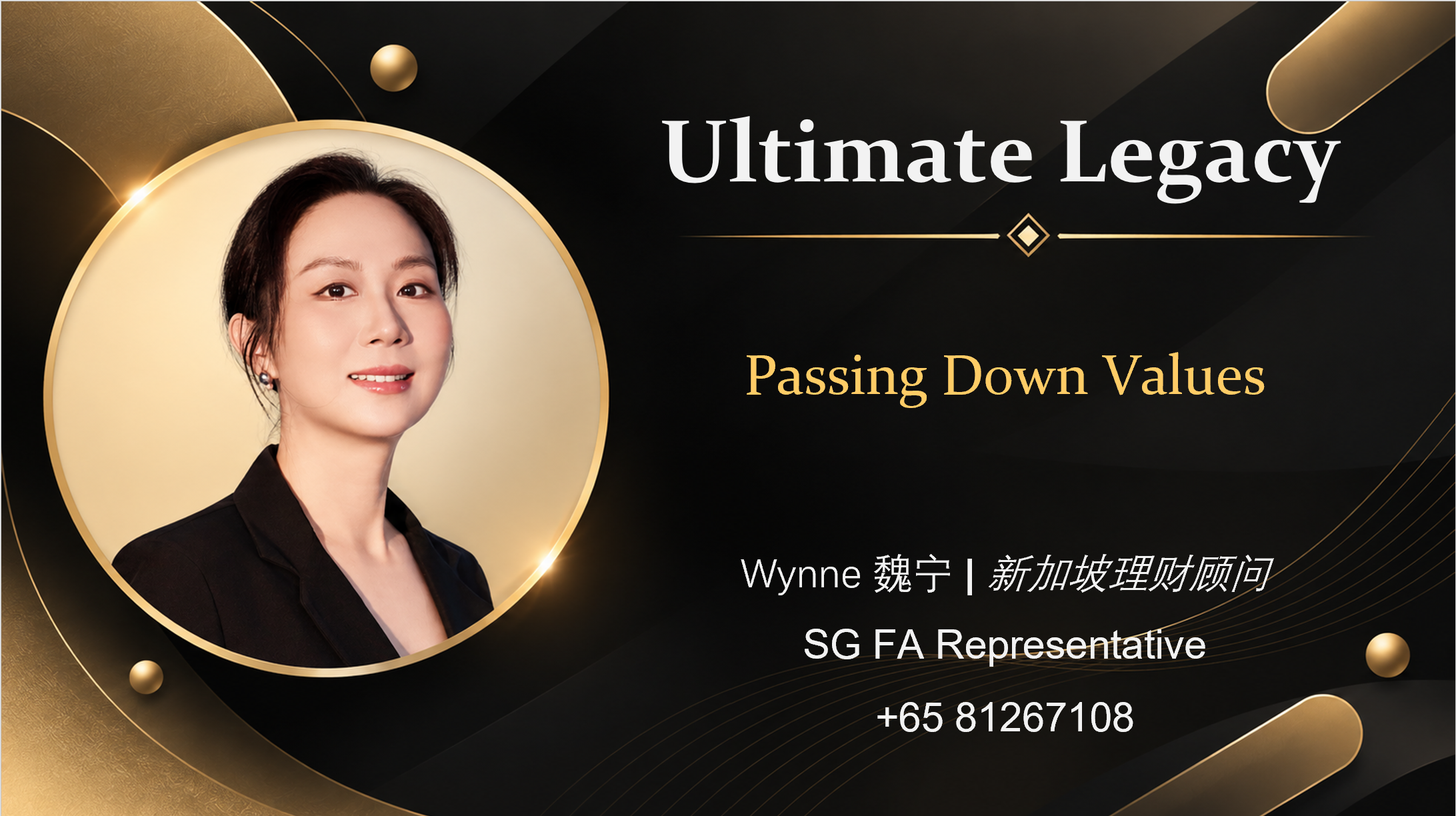
The Ultimate Legacy-Passing Down Values
When people talk about wealth succession, the first question that often comes to mind is: How much should the next generation inherit?
But true succession is not simply about how much money is passed down.
The more important question is this:
When the next generation takes over, what should remain after the wealth and the business have changed hands?
Warren Buffett’s approach to family and succession offers an interesting perspective.
His three children did not follow the traditional path of becoming successors to their father’s investment empire. They pursued very different interests — including philanthropy, agriculture and music.
More importantly, Buffett never made becoming “the next Warren Buffett” the goal for his children.
Instead, he gave them something that may be far more valuable: the freedom to build their own lives, along with the responsibility that comes with that freedom.
This reveals an important principle of succession:
Good succession is not about making the next generation become a copy of the previous one. It is about giving them the ability to become who they are meant to be.
For business-owning families, this can be understood in three levels.
First: Passing Down Wealth
This is the most straightforward form of succession — and the most basic.
Wealth can provide opportunities and security, but money alone does not guarantee good judgment, responsibility or the ability to manage that wealth.
If the next generation inherits significant wealth without developing the values and discipline to handle it, wealth itself can become a burden rather than a blessing.
Money matters.
But money should not be the final destination of succession.
Second: Passing Down the Position
The next step is handing over the business and its decision-making authority to the next generation.
This goes beyond simply transferring wealth.
But being the founder’s child does not automatically mean being the right person to run the company.
A mature family business should ask not only:
“Should the business be handed to the next generation?”
It should also ask:
“Who is best equipped to lead the business, and who is best equipped to protect what the family stands for?”
If the next generation has the ability and passion to lead, let them lead.
If their strengths lie elsewhere, their choices should be respected.
A business can be professionally managed. Leadership can be structured and institutionalised.
But the values behind the business are something else entirely.
Third: Passing Down Values
This is perhaps the most important layer of succession.
A business can be entrusted to professional managers. Wealth can be structured through proper planning and governance.
But what a family chooses to stand for — what it refuses to compromise, how it treats wealth, how it makes decisions and what it believes is worth protecting — is what ultimately determines whether its legacy can endure.
From this perspective, succession is not simply about asking:
“Who will take my position after I leave?”
The deeper question is:
“When I am no longer here, will my family still know what matters and why?”
This is why mature family businesses increasingly separate ownership, management and oversight.
Those who are best at running the business should run it.
Professionals should manage what they are best qualified to manage.
And trusted individuals should help protect the long-term interests of the family and its shareholders.
What the family truly needs to pass down is not simply control.
It is a sense of responsibility, a way of thinking, and a set of values.
For families who have already built meaningful wealth, this is a question worth considering early:
If one day you are no longer involved in the business, no longer making the final decisions, and no longer the person holding everything together, what do you want your children to inherit from you?
A sum of money?
A company?
Or a way of understanding wealth, responsibility and life?
Passing down wealth is the first step.
Passing down a position is the second.
Passing down values is the ultimate legacy.
The most successful succession is not about keeping the next generation permanently in the shadow of the previous one.
It is about giving them the capability and freedom to build their own path — while ensuring that the principles that matter most continue to live on.
Because what truly survives generations is not simply the number in a bank account, nor the title behind a desk.
It is the family’s attitude toward wealth, its understanding of responsibility, and its ability to know what should be protected when it matters most.
Money can be passed down.
Positions can be passed down.
But the most meaningful legacy is teaching the next generation why the wealth exists, why the business is worth protecting, and what kind of person they want to become.
Important: The information and opinions in this article are for general information purposes only. They should not be relied on as professional financial advice. Readers should seek unbiased financial advice that is customised to their specific financial objectives, situations & needs. This advertisement or publication has not been reviewed by the Monetary Authority of Singapore.

Published By:
Wynne Wei Ning
我是魏宁,2008年通过全额奖学金来到新加坡,并在本地公立医院手术室工作近14年。
如今作为理财顾问,我将医疗背景与金融专业相结合,为客户提供以需求为核心的保障与财富规划。
专业、责任、以客户为中心,陪伴客户做好每一步长期规划。如果您希望进一步与我联系,点击“预约咨询”。
I’m Wynne, I came to Singapore in 2008 on a full scholarship and spent nearly 14 years working in the operating theatre of a local public hospital.
Today, as a Financial Consultant, I combine my healthcare background with financial expertise to provide client-focused protection and wealth planning.
Professional. Responsible. Client-focused. Committed to every step of your long-term journey.
WA:+6581267108
WeChat:wynne_weining

CONTACT US
- 150 Beach Road #12-01/08, Gateway West Singapore 189720
- +65 62221889
- +65 62221019
- feedback@fa.com.sg