
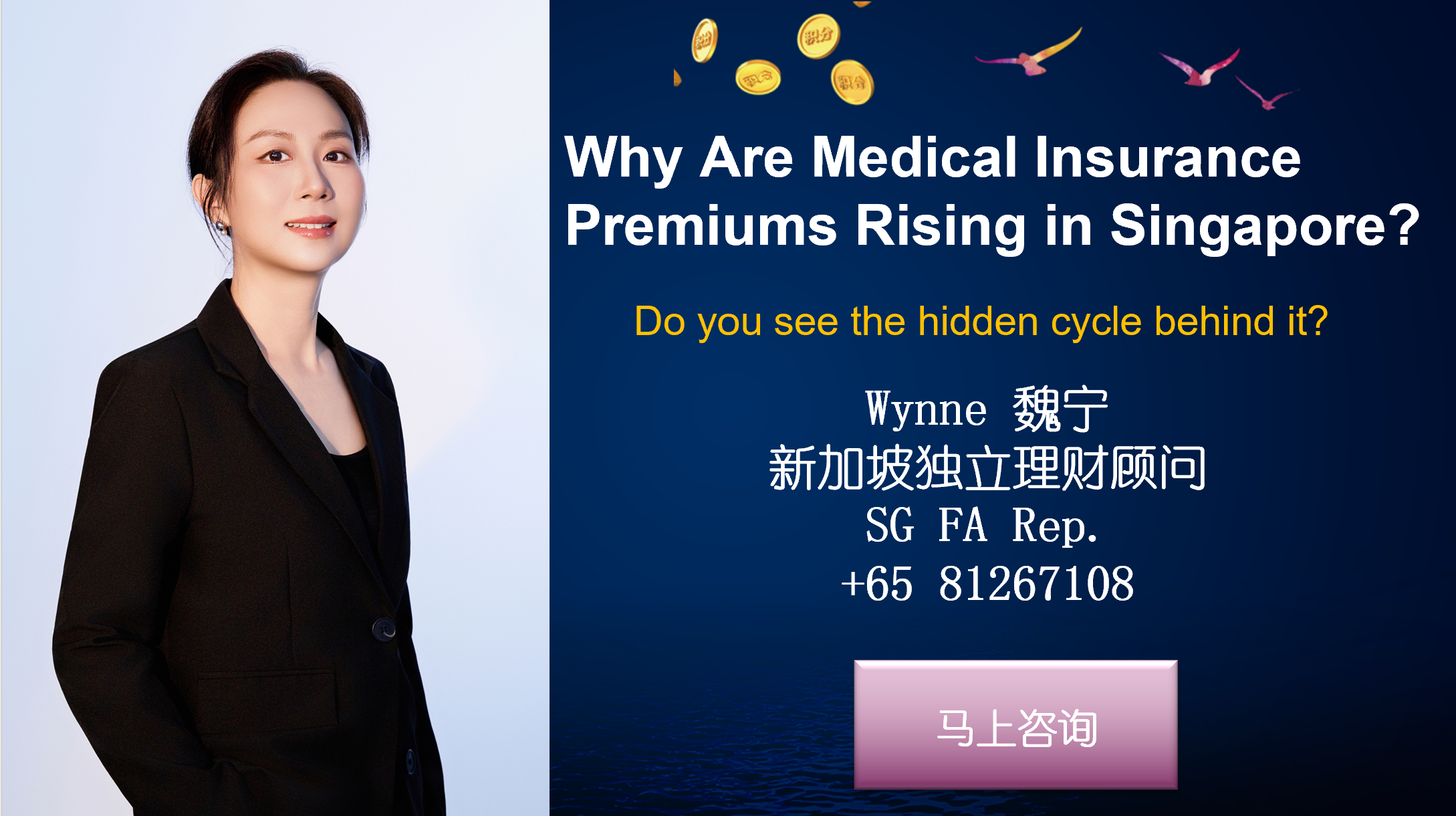
Why Are Medical Insurance Premiums Rising in Singapore?
In recent years, as medical insurance premiums continue to rise, many people’s first reaction is to assume that insurance companies are simply increasing profits.
But is that really the full picture?
In Singapore, close to 100,000 policyholders have been downgrading their medical insurance coverage each year. On 26 November last year, the Ministry of Health announced a new round of healthcare reforms, which officially took effect this April.
This raises an important question:
How did we get here?
The reality is that there is an invisible cycle at play.
Years ago, insurers introduced medical plans designed to provide greater peace of mind — plans that offered near full reimbursement for medical expenses.
On the surface, this seemed like an excellent solution.
However, this gradually created a behavioral shift:
- Patients naturally preferred the best hospitals and the most comprehensive treatments, knowing that most or all expenses could be reimbursed.
- Healthcare providers, in turn, were more likely to recommend premium treatment options when costs were largely covered.
Over time, this led to a predictable outcome:
Healthcare costs escalated.
As claim amounts increased, insurers faced significantly higher payouts, which inevitably translated into rising premiums for policyholders.
Eventually, many individuals found these premiums increasingly difficult to sustain and were forced to downgrade their coverage.
This is precisely why regulatory intervention became necessary.
The recent healthcare reforms are not fundamentally about reducing protection.
Rather, they are about restoring long-term sustainability to the healthcare financing system.
At its core, the issue is simple:
When everyone consistently chooses the most expensive option because cost is no longer a consideration, the system itself becomes unsustainable.
There is nothing inherently wrong with human nature.
People will naturally make choices they believe are best for themselves and their families.
However, no system can remain sustainable if it indefinitely amplifies those choices without balance.
When a system fails to account for human behavior, it will eventually be shaped — and challenged — by it.
If you’d like to know more, feel free to contact me anytime!
Wechat:wynne_weining
WhatsApp: 81267108
#singapore insurance # medical insurance # premium raising #human nature
Important: The information and opinions in this article are for general information purposes only. They should not be relied on as professional financial advice. Readers should seek unbiased financial advice that is customised to their specific financial objectives, situations & needs. This advertisement or publication has not been reviewed by the Monetary Authority of Singapore.

Published By:
Wynne Wei Ning
我是Wynne 魏宁,2008年通过全额奖学金来到新加坡,并在本地知名公立医院手术室工作近14年。医疗工作的经历,让我深刻理解风险管理与保障规划对家庭的重要性。
后来,随着组建家庭、成为三个女儿的母亲,我选择转型进入理财行业,希望结合自身医疗背景与专业经验,更全面地帮助家庭做好保障与财富规划。
作为独立金融顾问,我能够从超过150家金融机构中进行比较与筛选,为客户提供更客观、清晰且适合长期发展的财务方案。
我希望成为您在新加坡长期信赖的理财顾问,与您一起为未来建立更安心、稳定的基础。
期待与您进行一场有深度的对话,一起开启属于您的财富增长与风险守护之旅。如果您希望进一步与我联系,点击“预约咨询”。
WeChat:wynne_weining
WA:8126 7108
CONTACT US
- 150 Beach Road #12-01/08, Gateway West Singapore 189720
- +65 62221889
- +65 62221019
- feedback@fa.com.sg